Translate

Showing posts with label Taste Research. Show all posts

Wednesday, July 19, 2017

Food Line

A shared gastronomic experience
The promoted BCD encounter between the designer Martín Azúa and the gastronomic director from the emblematic establishment Monvínic, Guillem Oliva, arises a reflexion on the “sharing on the table” concept. Food line menu means breaking the dish sequence from a traditional menu. This new ritual has an impact on the preparation of the dishes at the kitchen, table service and the guest behavior. It is a large wooden support that contains a number of dishes. It is placed on two pieces in the center of the table. It may have different lengths depending on the number of diners. Table service becomes a performance where the presentation of the dishes, table service and diners interaction play an important role.
Food Line is presented on June 10th at the Design Hub, in the framework of the Barcelona Design Week organized by the BCD (Barcelona Design Centre) at 19:00.
Design by Martín Azúa
Prototype made by Orwood


CNN

http://www.cnn.com/travel/article/culinary-journeys-hk-vicky-lau-tate/index.html

Saturday, March 4, 2017

A History of How Food Is Plated, from Medieval Bread Bowls to Noma by Michael Y. Park

Any foodie worth his salt knows that there's more to proper plating than a sprig of parsley and a radish flower, but most can't tell you how we got from shoveling down dinosaur drumsticks à la Fred Flintstone to the edible forest paintings of Noma.

Trenchers


Depending on where you dine, of course, what your dinner looks like might not be that different from what people ate a millennium ago, especially if you still yearn for the pre-Atkins bread-bowl fad (or go to Au Bon Pain every day). In the Middle Ages, plating basically consisted of ladling stews or porridge into trenchers--hollowed out "plates" cut from loaves of old bread, the staler the better. Sure, some royalty enjoyed elaborate, heavily meat-based feasts with over-the-top themes or off-the-wall twists in preparation (think turducken times 10), but for the hoi polloi? Presentation consisted of slop on a doorstop.

Marie Antoinette

Thank Catherine de Medici for changing a lot of that in the 1500s. The daughter of the powerful Florentine family brought dining innovations--forks! ballet! topless waitresses!--with her when she married Henry II of France, and her cultural influence only grew as she became the most powerful woman in Europe. A century later, Louis XIV brought the lavishness of Versailles to its apex, and sealed cuisine's place as an integral part of French culture, both for its flavor and its aesthetics. But the French court's culinary spectacles largely remained just that: spectacles. Pretty to look at, not necessarily to be repeated in your own castle kitchen.

Engraving from Le Patissier Royal Parisien by Careme

It was Marie-Antoine Careme, arguably the first celebrity chef, who brought plating into the modern world. Careme, who was born in 1784 and died in 1833, was an avid amateur student of architecture--he even considered pastry making "the principal branch" of the art. As chef de cuisine to personages all the way up to Napoleon Bonaparte, he presented dishes in the shapes of famous monuments, waterfalls and pyramids; he's believed to have invented the croquembouche.

Wild turbot, shellfish, water chestnuts, and hyacinth vapor at Alinea (Credit: Lara Kastner)

Careme didn't just revolutionize pastry. He came up with the mother sauces, reduced the size of portions (particularly since he was largely working on large banquets with plentiful courses), and emphasized complementary flavors and pairings in presentations.
"For example, today with fried fish we need a cold emulsion," says
Sergio Remolina, a professor at the Culinary Institute of America and chef of the CIA's new Bocuse Restaurant. "That's a classic flavor, and he's the one who starts to pair the flavors like that."
But it was still only the elite who got to see and taste the benefits of Careme's innovations in cooking and presentation. Bringing a new aesthetic appreciation for food to the larger masses had to wait for Auguste Escoffier, who was born two years after Careme died. The timing was no coincidence.
"The Industrial Revolution is happening, and with the Industrial Revolution we have the first millionaires, people who travel for pleasure, the railroad," Remolina says.
Arguably Escoffier's most important contribution to the history of cuisine? A la carte service.
"With Escoffier the portions are still coming in large trays, plated in multiple portions, not the individual plates we know today that are heavily decorated with a lot of work on each plate," Remolina says.
Born to an era where most of the cooking was still done over charcoal and wood in separate buildings and then carried a relatively long distance to where people ate, Escoffier tinkered with devices and methods that allowed cooks to finish meals in the dining room instead. Now smaller, more individualized plates could be served without getting cold.
"People can choose what they eat," Remolinda says. "They're not eating off a presented menu. And fine dining is born as a business."
In the early 20th century,

Fried reindeer moss with cepe at Noma (Credit: Flickr user Adelcambre)

Fernand Point introduced elements that would become signatures of nouvelle cuisine--seasonal ingredients with a focus on natural flavors, an emphasis on service and hospitality, lighter fare, and, above all, simplicity and elegance. He even made the now-ubiquitous baby vegetables a regular addition to the plate.
Point's approach was solidified by his most famous protege, Paul Bocuse, whose "neat and detailed" food presentations became the iconic images of increasingly popular nouvelle cuisine in the 1960s. The next generation of chefs, like
Charlie Trotter and
Alice Waters, took minimalism in cooking and presentation even further. Today, you get Noma's fried reindeer moss with cepe, which appears as if the kitchen had simply pulled up a square foot from a Danish forest and transferred it to a flower-pot saucer.
"In the late 1800s, the sauce is used to hide some of the defects in the meat or the smells because of the treatment of the protein, which could be a little bizarre," Remolina says. "Today, the goal is to feature the ingredient as close as possible to the source. If we have very fresh microgreens, or a fresh fish, we put it right on the plate. When we have a fresh item, we don't need to do much to it. The freshness of the ingredients guides the presentation."
With that in mind, the science-fiction foam impossibilities of El Bulli or the 28-course marathons of Alinea might seem a throwback to the elaborate feasts of Careme or the inedible intellectual noodlings of the Italian Futurists (think linguini in motor-oil sauce with steel nuts and bolts). But in the case of molecular gastronomy, the fanciful presentations are a way of emphasizing, not masking, the flavors.
"They work on extracting the essence of the ingredient, and they play with the sense and textures," Remolina says. "All the senses are involved. Now food is a show."
But don't worry that an age is coming when you won't be able to tell whether something on your table is a fanastically delicious, criminally overpriced meal--or something you forgot to throw out after an afternoon weeding the garden. Evolving presentations or no, great-tasting things will always taste great. Even if they're not served on the branch of a freshly felled birch tree tenderly raised by Greek Orthodox monks atop a mountain retreat in Arcadia.
"A good taco al pastor is going stay around forever," Remolina says reassuringly. "It won't change."
Michael Y. Park is a writer based in Brooklyn. He has eaten scorpions and maggots in Manhattan, picnicked with the king and queen in Malaysia, and traded nuts and fruits in the Khyber Pass and Afghanistan while disguised as an Hazara tribesman. He also once recreated White Castle sliders with baby food.

Source Bon Appétit

Saturday, May 21, 2016

Monochromatic and Focal Point


Isabella Vacchi


Source link here.

How Wine Became Modern, Exhibit at SFMOMA

The "Smell Wall"
The exhibit wasn't just visual — it offered other, less-explored sensory experiences. Although there wasn't any actual wine drinking involved, architecture firm Diller Scofidio + Renfro designed a smell wall, an olfactory exercise that allowed visitors to come to their own conclusions about certain contentious aroma descriptors such as "petrol" and "hamster cage."

Kristina Falck, Designer


I have made everyday objects. For the imagination and for the table.
A composition in which I have worked with function and play.
In ceramics.

Source link here.

Willem Noyons, Designer


J I N hyun Jeon, Sensory Cutlery Collection, 2012


Watch Sensory Dining Experience, Click here Vimeo

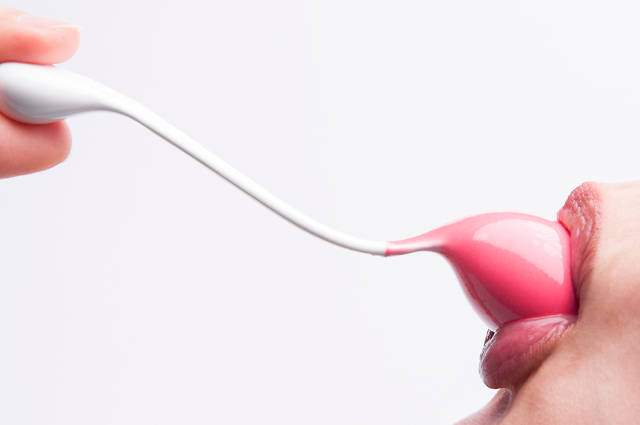
Cutlery design focuses on getting food in bite-sized morsels from the plate to the mouth, but it could do so much more. The project aims to reveal just how much more, stretching the limits of what tableware can do. Focusing on ways of making eating a much richer experience, a series of dozens of different designs has been created, inspired by the phenomenon of synesthesia. This is a neurological condition where stimulus to one sense can affect one or more of the other senses. 
An everyday event, ‘taste’ is created as a combination of more than five senses. Tasty formulas with the 5 elements – temperature, color, texture, volume/weight, and form – are applied to design proposal. Via exploring ‘synesthesia’ if we can stretch the borders of what tableware can do, the eating experience can be enriched in multi-cross-wiring ways. The tableware we use for eating should not just be a tool for placing food in our mouth, but it should become extensions of our body, challenging our senses even in the moment when the food is still on its way to being consumed. Each of designs have been created to stimulate or train different senses – allowing more than just our taste buds to be engaged in the act and enjoyment of eating as sensorial stimuli, therefore it would lead the way of mindful eating which guides to rediscovering a healthy and joyful relationship with food. 
 The materials in the design currently compose of metal, plastic and ceramics. Each material possesses its natural temperature, which works in harmony with the intent of the design.  From the thickness of the handle to the volume mass of the spoon, it evokes a different effect. Weight distribution changes according to the thickness and the volume affects the sound vibration. Each of these features is subtle but in combination, they harmonize into enhanced tasty effects. As for the specific workings of the features of the design, it could be understood through the elaboration of the five elements – temperature, color, texture, volume/weight and form.
Enhanced Tasty Formulas
 
Temperature
SWEET × 36.5°C = SWEET × +++
SALTY × < 36.5°C < SALTY × < 0°C
SOUR × 36.5°C = SOUR × 100°C
BITTER × 36.5°C > BITTER × 100°C
 
Tactility
+++ ×  (SWEET + SALT) = X
SWEET + (0.5% × SALT) = SWEET ++
SALT ÷ SOUR = SALTY/SOUR -
SALTY × SOUR = SWEET +
 
Colour
10% × (5R 4/14 + 5YR 4/14 + 5Y 4/14) = 2.0
90% × (5R 4/14 + 5YR 4/14 + 5Y 4/14) = 0.1
20% × R > 20% × Y
 
Volume/ Weight
5cm3 × SOUND/ SIGHT = 10g × TOUCH
 
Form
1mm × TOUCH > 10mm × TOUCH
(y=f(x)) × TOUCH = Y


Designer Jinhyun Jeon was born in South Korea, based in Eindhoven, the Netherlands. Jeon received BA in Product Design and completed MA in Spatial Design at Hongik University, Seoul, Korea in 2008. She moved to the Netherlands, gained MD in Social Design from Design Academy Eindhoven in 2012 and established Studio Jinhyun Jeon.
 
jihyun.com
 

Edible Zen Garden


The Shinan-ji Temple Rock Garden is a unique collaboration between art directors Tomonori Saito, Shohei Sawada and Japanese confectioner Motohiro Inaba
Named after a fictional temple, this miniature zen rock garden is made entirely from sweets. The rocks are made from black sesame paste, dusted at the base with matcha powder (to look like moss), and placed in a bed of sugar (resembling sand). A small wooden rake is also supplied in the candy box, to add a zen-like ambiance to this edible garden.


Vicky Lau’s edible “Zen Garden”. 
For Hong Kong chef Vicky Lau, owning a restaurant isn’t just about making money or creating visually-stunning dishes for that 15 minutes of fame. A graphic designer turned critically-acclaimed chef, restaurateur and, most recently, Veuve Cliquot Asia’s Best Female Chef 2015, Lau still believes there’s much to be explored.
“Do we really need to sit at a restaurant nowadays?” she mused. “With the Hong Kong real estate being so expensive, maybe a restaurant doesn’t really need an address.” This is something Lau is beginning to explore with Butler, a bespoke luxury catering service she launched back in September 2014, which also hosts stunning ‘food’ exhibitions.


Restaurant ANDRE, Singapore

Stephanie Marin, Smarin Design

Ryan Fletcher, Designer for Achatz and Dufresne


Presentation is everything for chefs. Not only does their food have to taste delicious but it has to look good as well. Sometimes it can be hard for chefs like Grant Achatz and Wylie Dufresne to plate their molecular creations.

In the past, Achatz and his staff have partnered with designers to create their own utensils - like the porthole. That's where the talent of designers like Ryan Fletcher can come in handy. 

Fletcher has created a line of tiny plates for plating petite portions.

His line of Tapas Micros is made of porcelain and perfect for tasting menus like those offered at The French Laundry. Here's how he describes his work:

''My ceramic forms originate from standard functional objects like a spoon, or bowl, cup, or plate while seeking to challenge a preexisting understanding of that object and it’s function. I try to engage the user by creating a moment where they must stop and rethink how they will interact with the object.''

You can check out Fletcher's full line of Tapas Micros plates on his website.


Wednesday, May 4, 2016

Cheese Maker, Studio Makkink & Bey


Made in collaboration with craftspeople in India, Studio Makkink & Bey's totem cheese maker contains every tool needed to make cheese: a juicer, milk jug, spoon, pan, colander, cutting board, bowl, cheesecloth and press. Each component is made of a different material.

The piece draws inspiration from the similarities between lifestyle and culture in the Netherlands and India - including the long history of ceramic craft, the passion for hand-making cheese and the use of stacking for both houses and housewares, which all permeate both country's cultures.

Cheese Maker will be launched at Ventura Lambrate during Milan Design Week next week. For more food toolkits, Homebuildlife subscribers can read our food & tabletop report on DIY Food Kits.

homebuildlife

Peca Design

Marble and hammered copper. 


Sunday, May 1, 2016

Omer Polak, Industrial Designer


Designer Omer Polak's 'Blow dough' project manufactures dough balloons using an industrial blower
EMMA HUTCHINGS 
Israeli designer Omer Polak is a graduate of the Department of Industrial Design at Bezalel Academy of Arts and Design in Jerusalem. Polak inflated food as part of his “Blow dough” art installation, which illustrates the food manufacturing process in a small-scale factory that was established for one day as an analogy to street food carts and the urban eating experience in Jerusalem.
The inflated food designs were created with flour and water, inspired by popular Jerusalem food scene ingredients found in pita bread, bagels, bans, and more. The aim was to exhibit to viewers an open and transparent scene of the production process as well as a fresh perspective on dough.
“Blow dough” manufactured dough balloons using an industrial heat blower, with temperatures reaching as high as 600-degrees Celsius. This made the seasoned dough bake while blowing it into the shape of an inflated balloon. In the manufacturing process, local herbs were added to the blowing and assimilated into the dough, which helped to enrich the entire eating experience for those involved.
This project was created for the Jerusalem Design Week, and it reflects many aspects of Jerusalem. The multicultural city hosts many types of foods, dishes and eating habits influenced by different cultures. The local food in Jerusalem is usually referred to as “street food” and characterized by a similar food-making process, which surrounds one small counter where all the magic happens.
One of the most popular and common ingredients in the Jerusalemite food arena (and the entire middle east) is the various different types of bread. This is why the very basic ingredients of flour and water were chosen for this project and combined with the designer’s creative processes.
The “Blow dough” food design project offers a new perspective on dough uses by borrowing the producing process from other industries. It also enables the participants to view and be exposed to the food process both openly and transparently. You can check out the design process and see lots of people creating dough balloons of various shapes and sizes in the video below:
source link here

Friday, April 29, 2016

Eat Drink Design


JUST FOOD OR FOOD DESIGN?

World-class chefs and designers worked together as a couple in order to design their own Signature Snack. The question was whether the synergy between the designers and chefs could result in more than just a nicely presented piece of food. 

STUFFED QUAIL IN SLOWLY COOKED CLAY

The Signature Snack by Kiki van Eijk and Johan van Groeninge (Avant-Garde) combines both their 'signatures' and serve a stuffed quail in ceramics. This concept has been derived from one of the dishes that the restaurant is famous for: spring chicken in chamotte clay. Of course, designer Kiki van Eijk added her own twist to it by designing the ceramics. When you break open the ceramic, the little quail will appear.

FUSION OF DESIGN AND CATERING INDUSTRIES

Eight designers and eight chefs collaborated as a pair to attain unique products that can be used in restaurants. The designers were inspired by the chefs and vice versa.

MAARTEN BAPTIST / AVANT GARDE STAND

Patron Cuisinier Johan van Groeninge loves to be inspired by beautiful or unusual services. This is why Maarten Baptist designed a silver clamp especially for restaurant Avant Garde with a holder fashioned out of laboratory glass and which literarily adds taste to the food: one drop of an extra ingredient, to go with every bite of food.


Plate Design